
2024-01-17
client, properties, computers
The following focuses on the edit function of the CCBoot PC page, detailing all functional details
- Go to the Boot page from the admin panel, then click on the “Computers” tab (Figure 1).
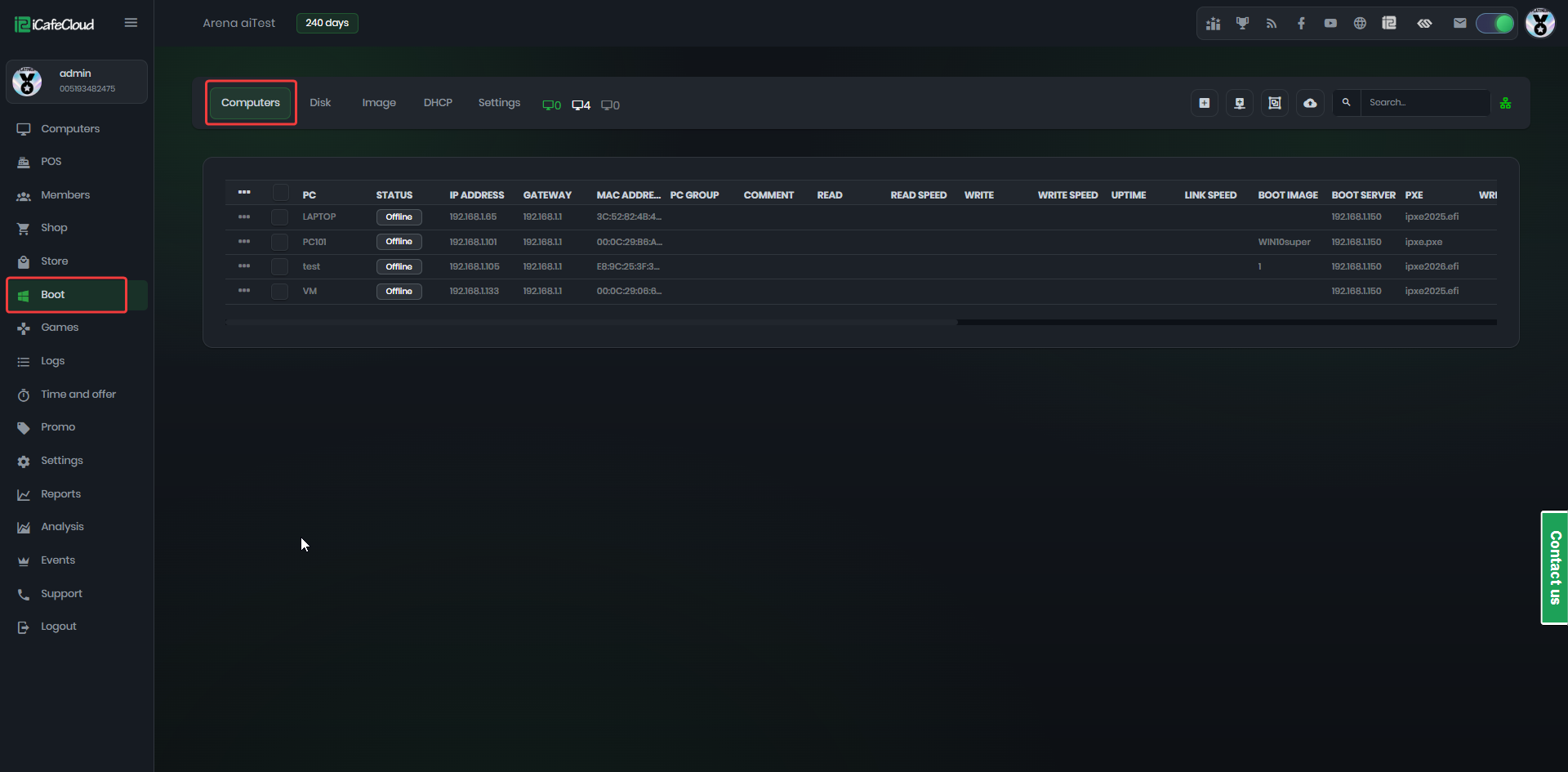
Figure 1
- For the client’s details, right click on the PC and click on the “Edit PC” (Figure 2).
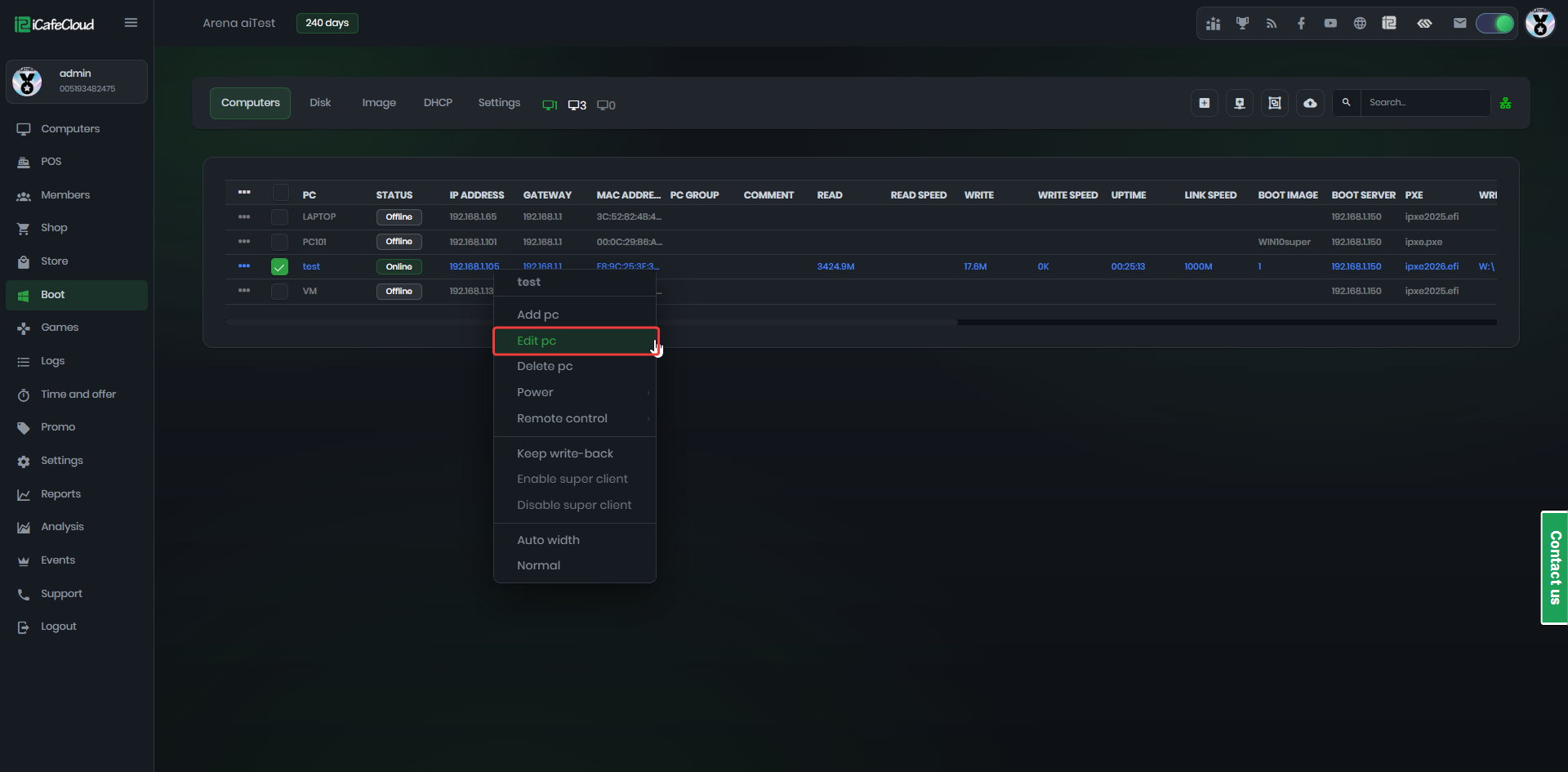
Figure 2
- Then the modal with client details will appear (Figure 3).
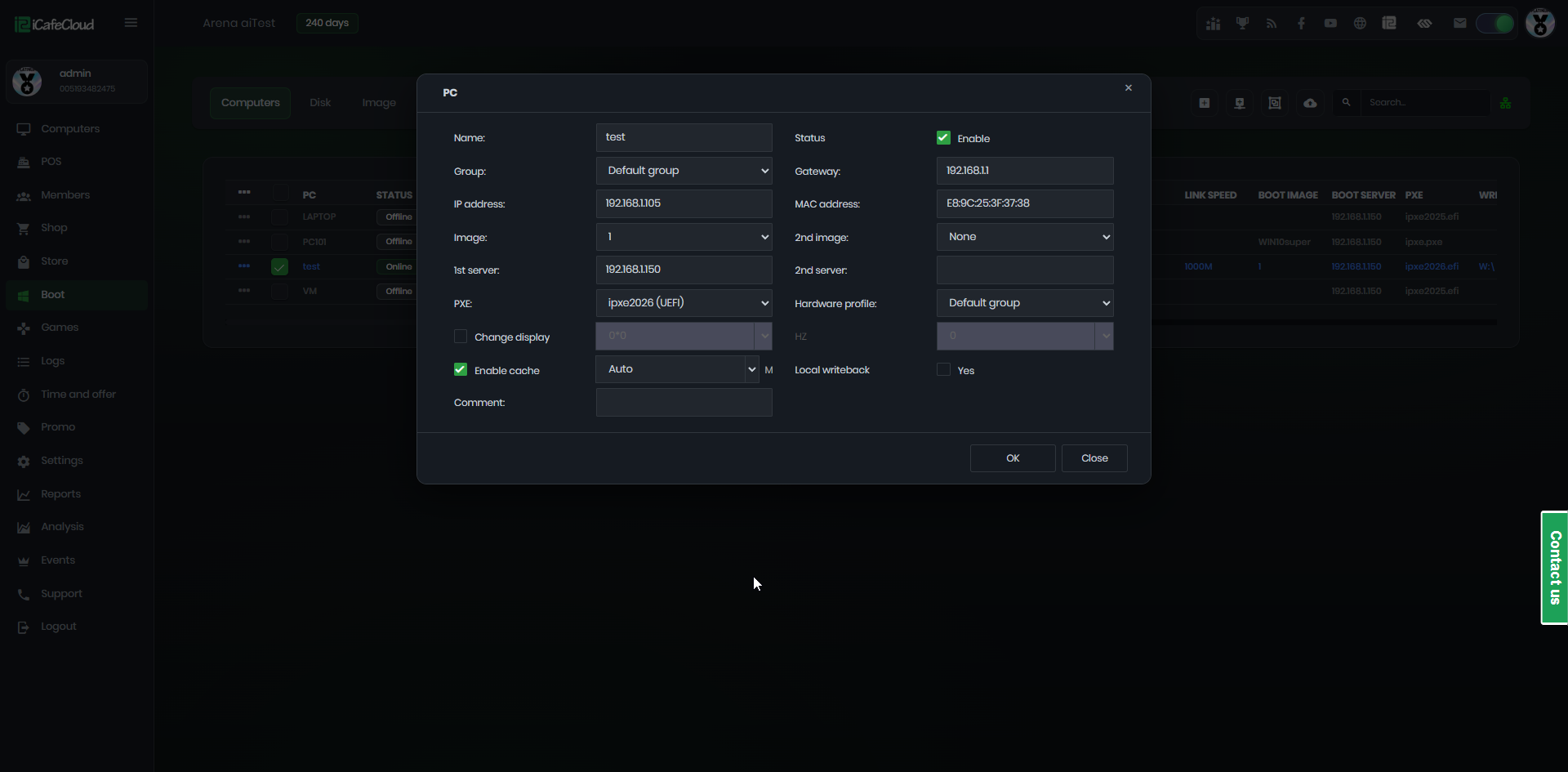
Figure 3
- Computer Name: The client computer name.
Enabled: Indicates whether the client PC is enabled for diskless booting.
Group: Defines the user group to which the client belongs.
Comment: Field used to add notes or comments.
IP Address: IP address assigned by the CCBoot Server.
MAC Address: MAC address of the client device
Image: Assign the primary image to the client.
2nd Image: Assign a secondary image to the client
1st Server: IP address of the boot server. If multiple servers are available, additional server IPs can be configured.
2nd Server: IP address of the secondary boot server when load balance server running. - PXE: Specified PXE file name. Ipxe.pxe can support most of the network cards.
but if you cannot diskless boot the client via using "ipxe.pxe", you can try to change the ipxe2026 or for older motherboards ipxex.pxe - Hardware Profile: Sets the client hardware configuration profile.
- Change Display: Used when the client has multiple monitors. You can configure
Resolution and Refresh Rate for each client.
All fields must be completed for the settings to apply. You can select values from the dropdown list or manually enter a custom resolution. If any field is left empty, the settings will not be applied. - Enable Cache: Setting the memory to use as a client cache depends on the client's memory size. Example: client RAM is 2GB you can set the 256M to be used as a cache.
- Local Writeback: Uses a local HDD/SSD on the client as writeback storage while still booting from CCBoot. The local disk is not used for the OS or games. This helps reduce the load on the server writeback disk.