
2024-01-12
client, cache, local, writeback
The following explains how Local Writeback Cache uses a disk temporarily. Data is buffered locally to improve responsiveness and reduce immediate server I/O load, while the system continues to operate in centralized disk mode.
- To activate local writeback, simply check the designated option in the client's edit settings.(Figure 1)
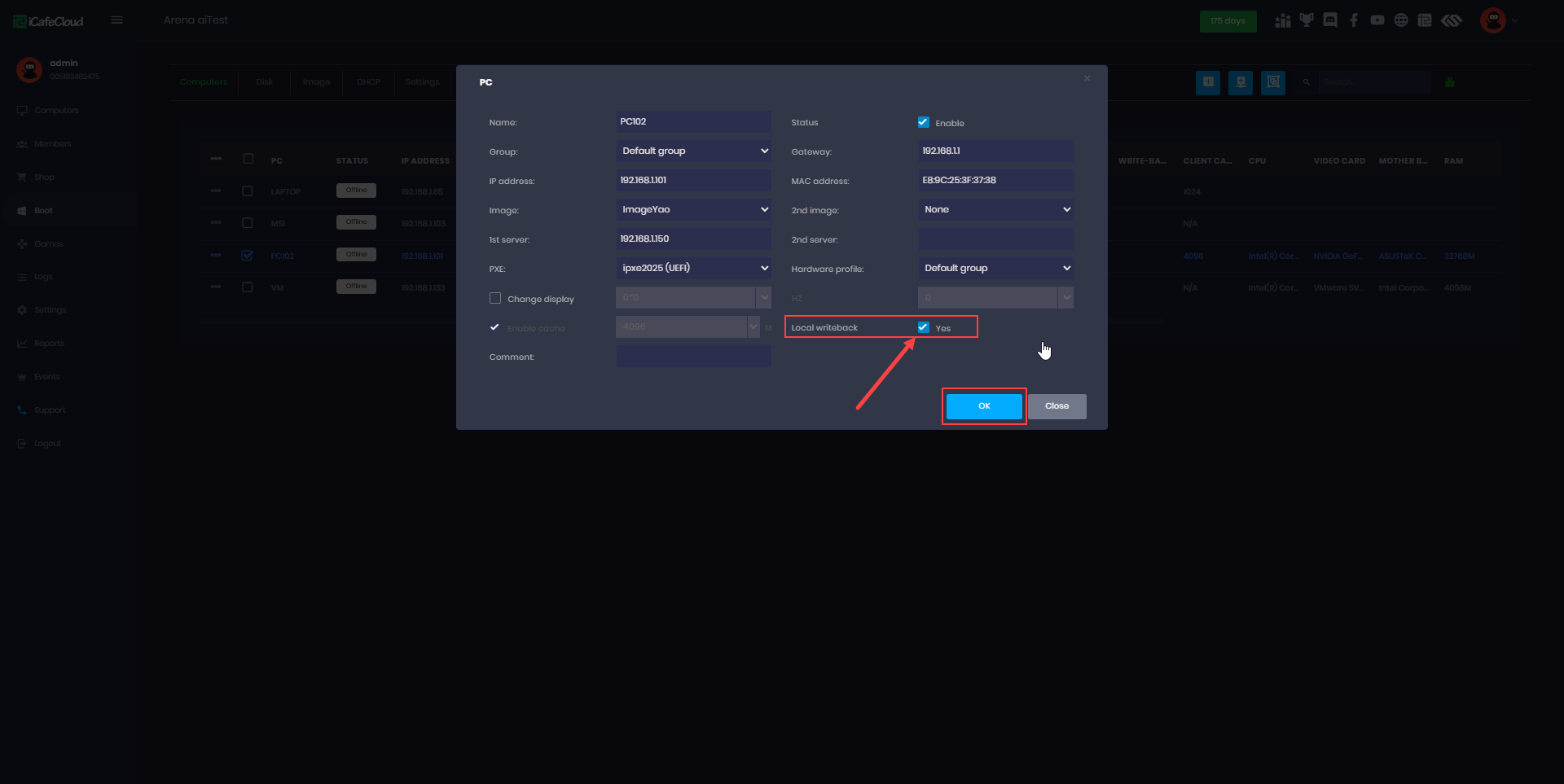
Figure 1
- To ensure this option functions properly, the writeback disk must be an SSD or NVMe, formatted with a 32K allocation unit size, and set up as a single partition. Failing to meet these requirements may cause client restarts or freezing issues.
- Enabling local writeback reduces the load on the server’s writeback disk.
- On the local writeback disk, you will see two files: C.CCachex and D.CCachex. The letter before .CCachex corresponds to the drive letter being cached for example, C for the system image and D for the game disk in this case.(Figure 2)
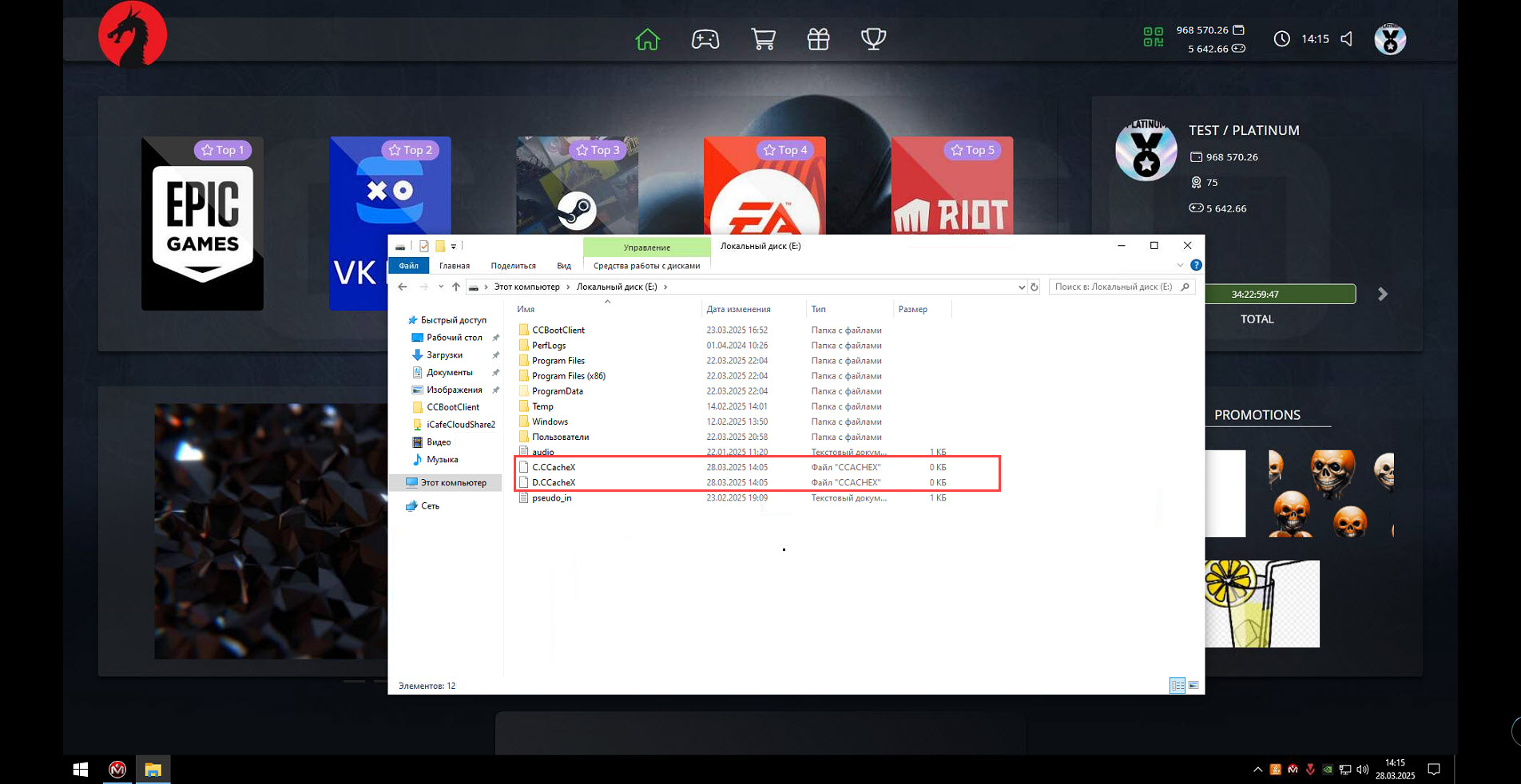
Figure 2
- If the file shows as 0 KB in Windows Explorer, that’s normal. You can view the correct file size by right-clicking the file and selecting Properties (Figure 3).
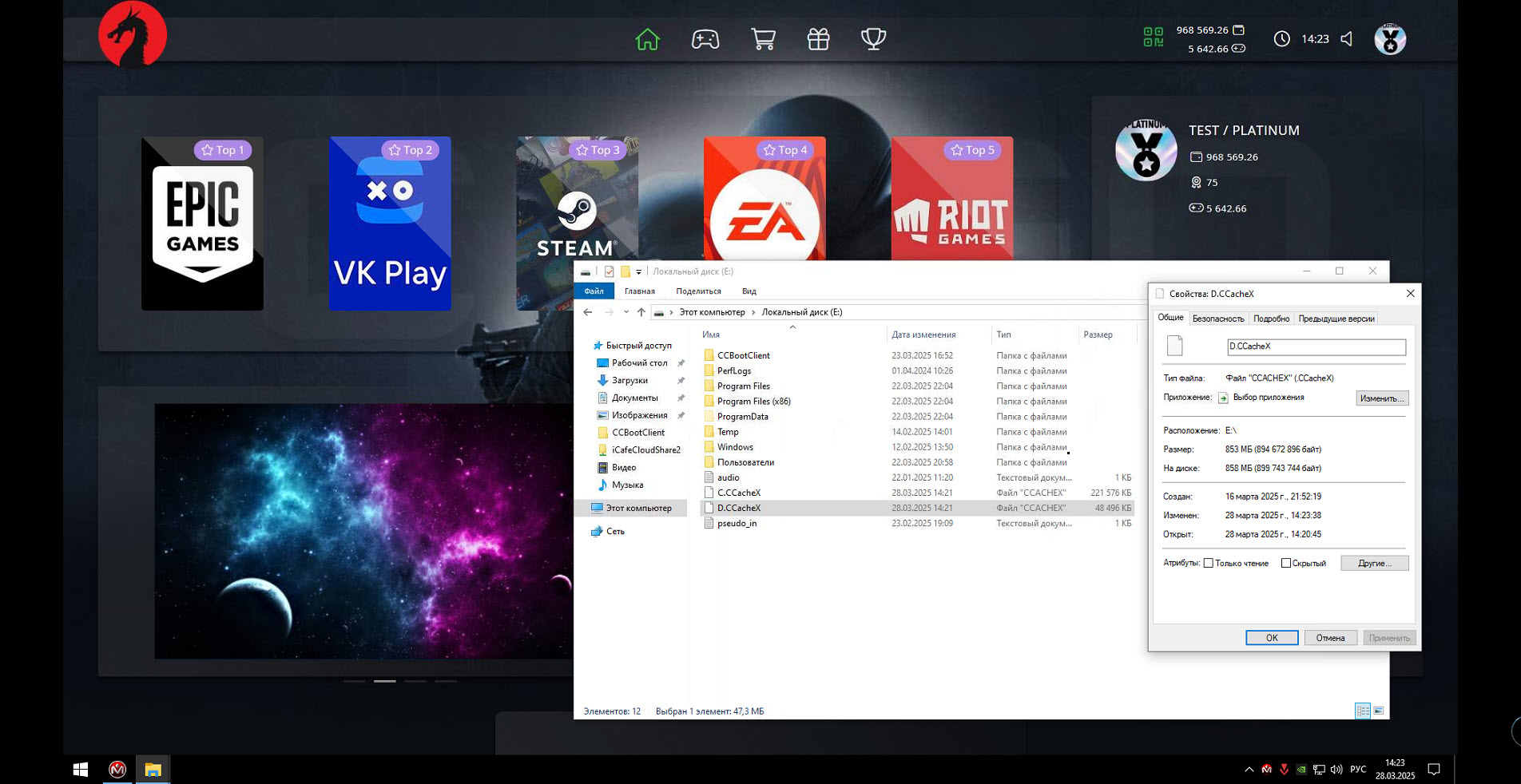
Figure 3
- CCBootClient uses the first disk detected on the client side for local writeback. If there are other disks present, remove them to avoid conflicts.
- Avoid using faulty or outdated SSDs or HDDs for writeback, as this may lead to performance issues.
- Avoid using low-quality or unknown brand NVMe drives, as they may cause instability. It is recommended to use reliable models such as Samsung EVO for consistent performance.
For example, drives like SK hynix BC711 NVMe may cause freezing issues in some setups.