
2026-05-13
restore, point, images
The following explains how to restore an image to its last working state. This can be useful if you perform an update and later notice problems or unwanted changes. Restoring the image allows you to return to the previous working version.
- When the Image is updated, the system will automatically create a restore point. Using "merge to last", you can merge this operation from the last action, and you can also merge the multiple restore points.
- Navigate to Boot → Image, select the image you want to restore, then click the ‘Image Restore’ option from the menu.(Figure 1).
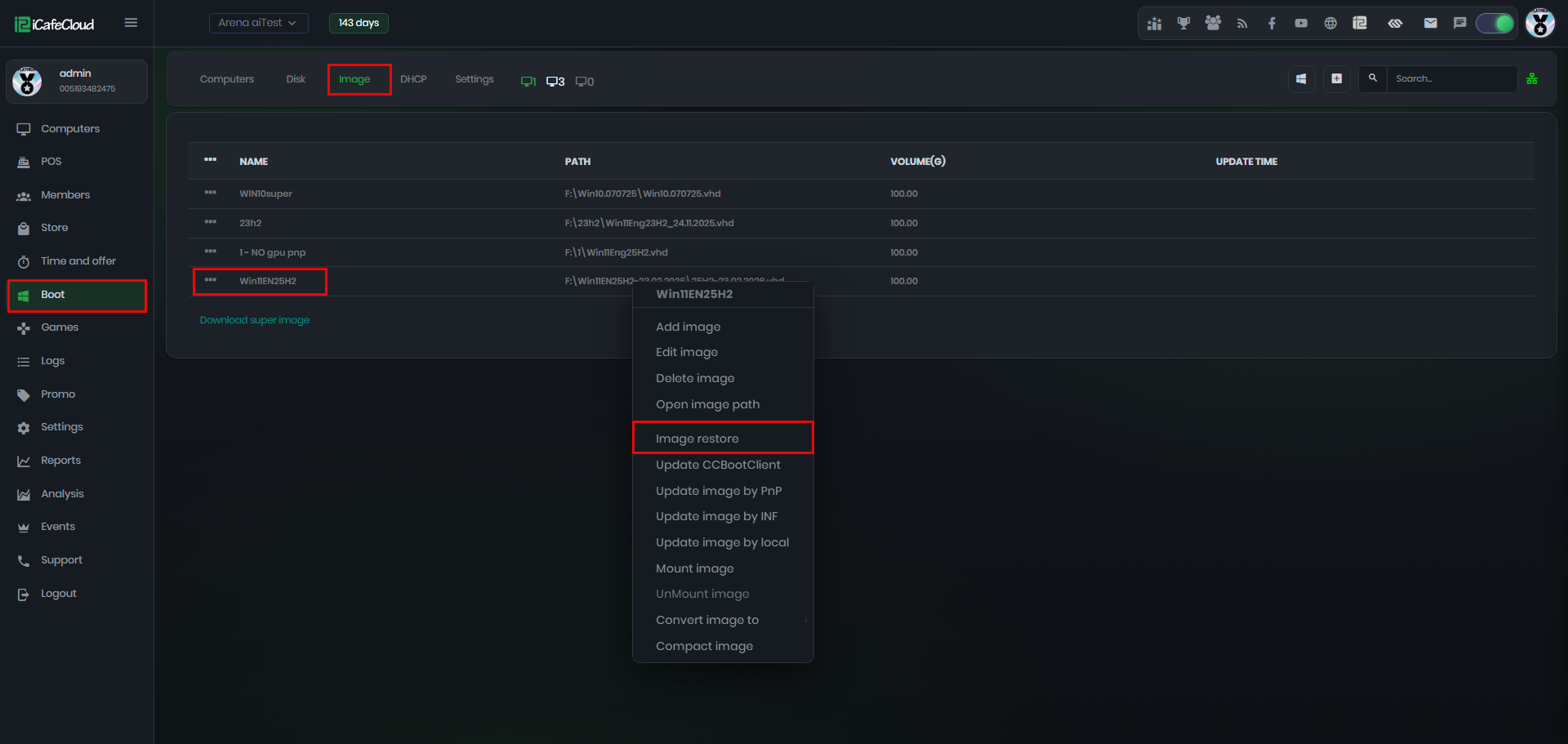
Figure 1
- The Image Restore window will display the saved restore points, including their date and description.(Figure 2).
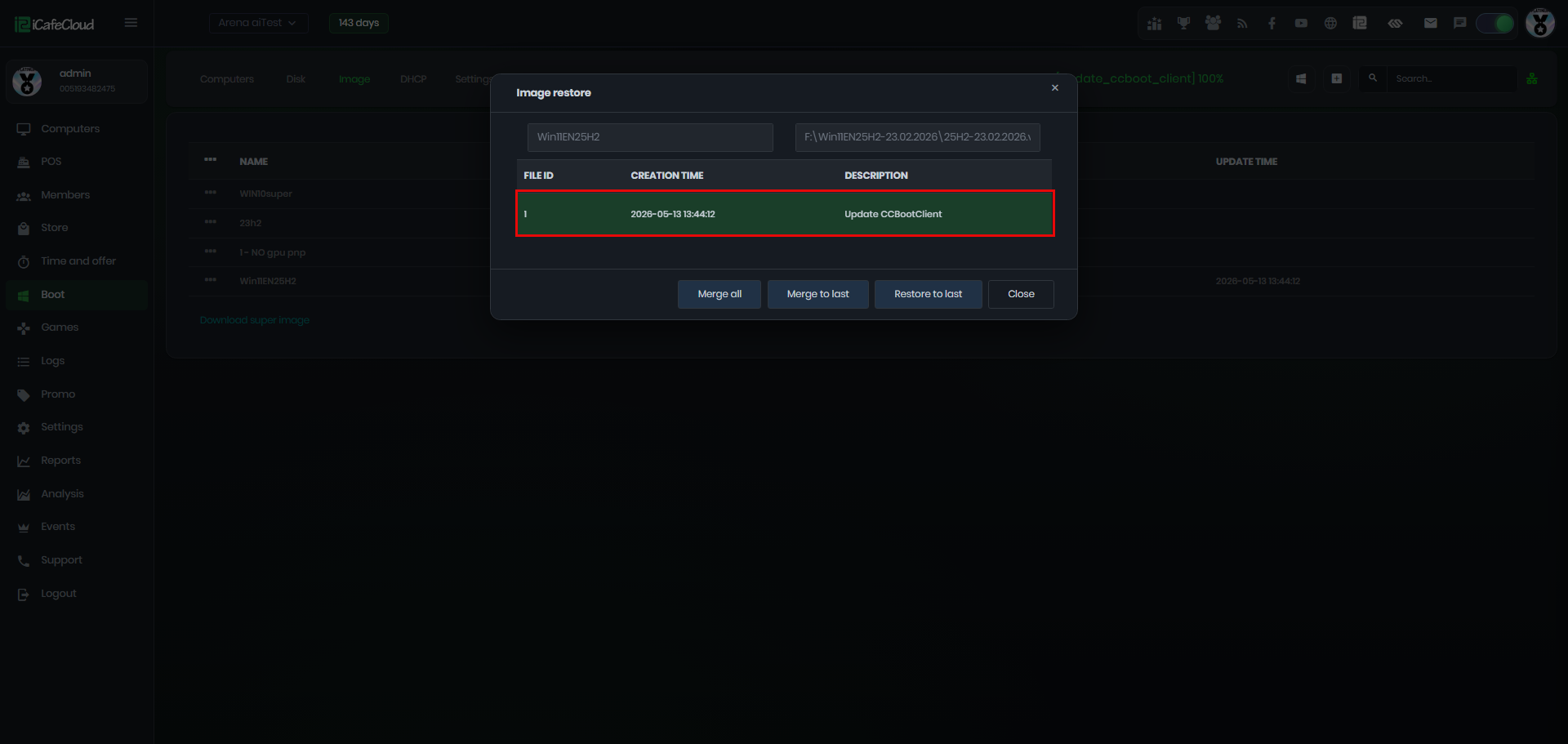
Figure 2
Merge All
- Before merging Image please disable super client and unmount Image
- Merges all entries from the ‘Image Restore’ list into the main image and deletes all restore points from the image disk to free up space.
This action cannot be undone, so make sure the image is booting and working correctly on all PCs before using it.
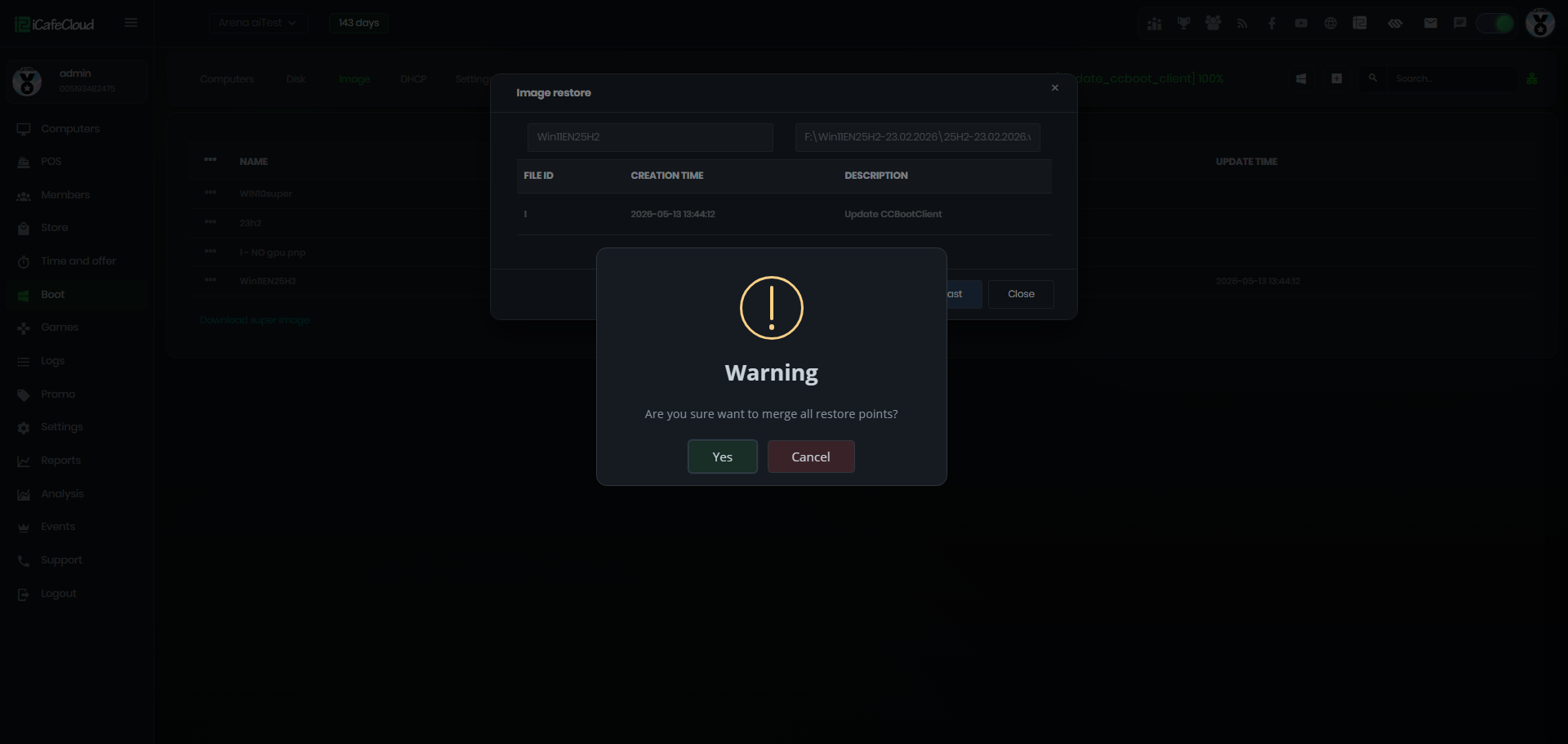
Figure 3
- Once you “Merge all” the recovery points, you will not be able to restore the image to previous as the entries for restore points and the restore points files will be deleted.
- You should only merge all if your image is booting properly on all of your computers.
- You should merge all after you have 5-10 restore points, so that your image disk does not get full.
- You should never put a client in superclient mode if your image disk is almost full. Merge all first to free space before doing superclient on a client
Merge to Last
- Merges the latest restore point into the previous one. This action cannot be undone, so make sure the image is booting and working correctly on all PCs before using it.
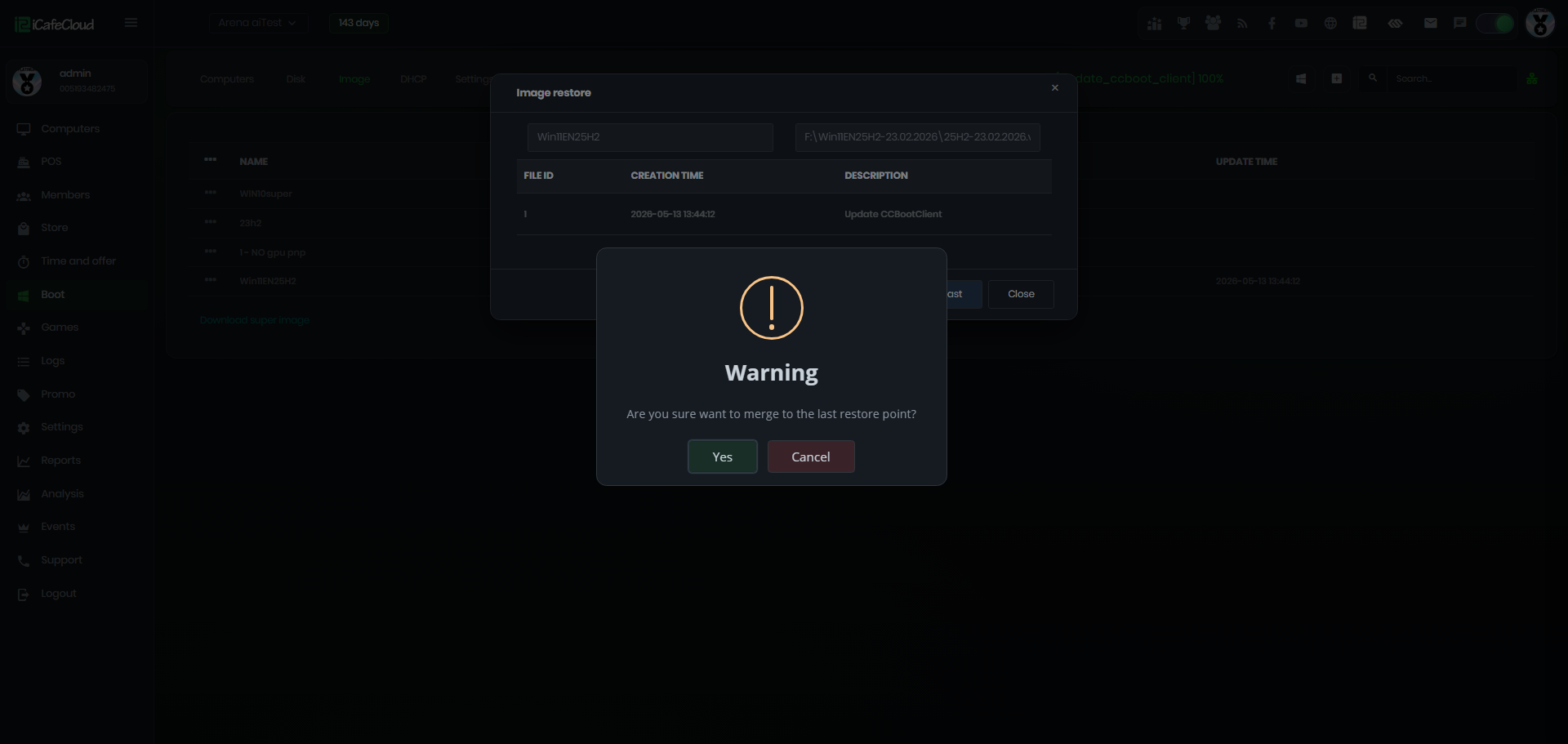
Figure 4
Restore to Last
- Reverts the image to the previous restore point. This feature allows you to undo changes, fix mistakes, and restore the image back to an earlier working state.
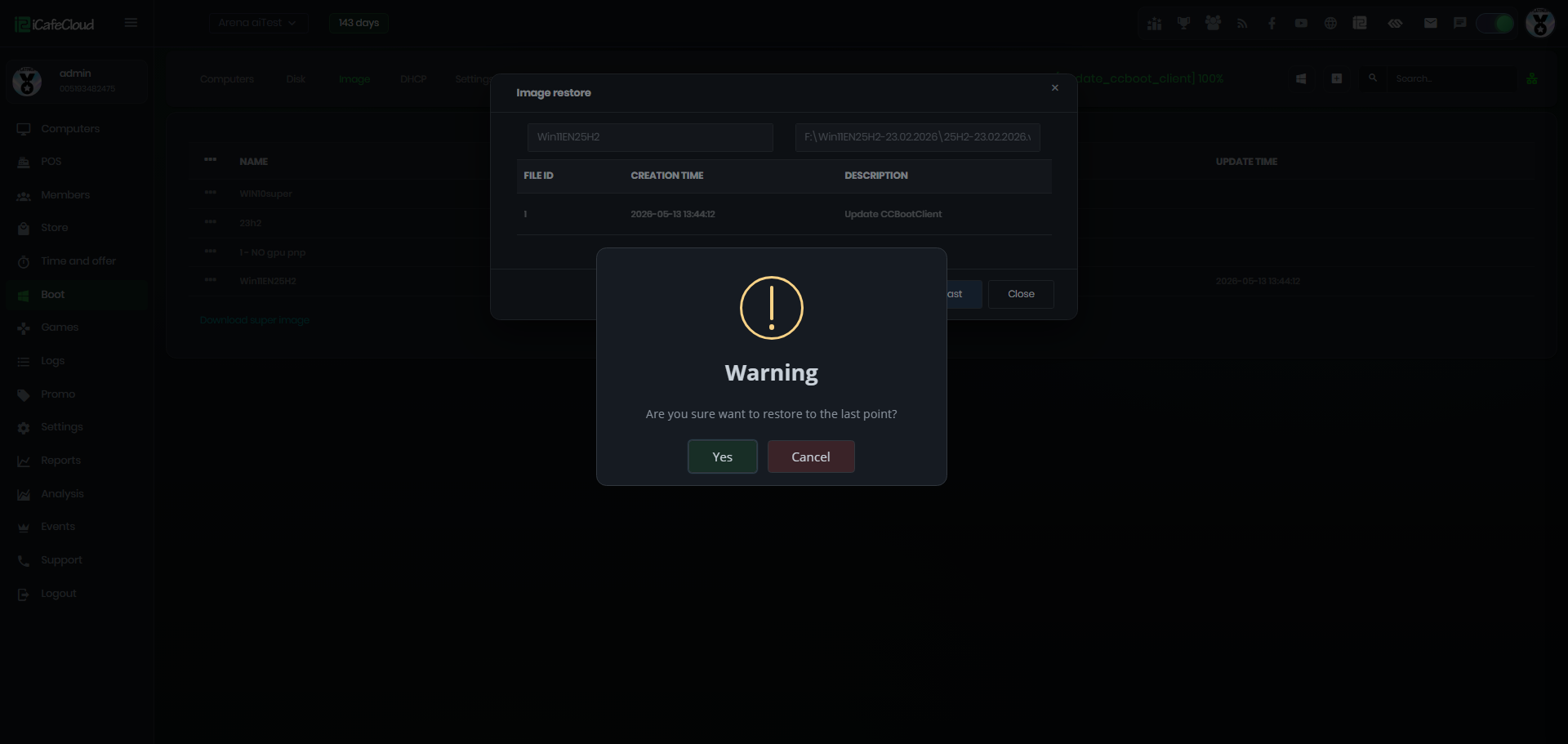
Figure 6